January 10, 2026
|
5 min read

The shift from simple Large Language Model (LLM) applications to Agentic Systems has introduced a new set of infrastructure challenges. As highlighted in our recent analysis on Unifying the Agentic Stack, the modern AI landscape is characterized by fragmentation: disparate frameworks (LangChain, AutoGen), incompatible protocols (REST, MCP), and siloed tools.
While the industry has successfully standardized Compute (managing inference via AI Gateways), the infrastructure for managing the lifecycle of an agent remains undefined.
At TrueFoundry, we view the Agent Gateway not merely as a proxy, but as the unified Control Plane for this ecosystem. As detailed in our guide on Top Agent Gateways, a production-ready Gateway must serve as the interconnect middleware that standardizes protocols, enforces security policy, and orchestrates the state of execution.
To help engineering teams navigate this transition, we are publishing a 7-part technical series detailing the core pillars of a production-ready Agent Gateway.
Any platform aiming to support autonomous agents at enterprise scale must solve seven distinct engineering challenges. This series will provide the architectural blueprints for each.
We have structured this series to follow the natural engineering journey: from high-level architecture to protocol design, security, and finally, operational lifecycle management.
Below is the complete syllabus for the blog series.
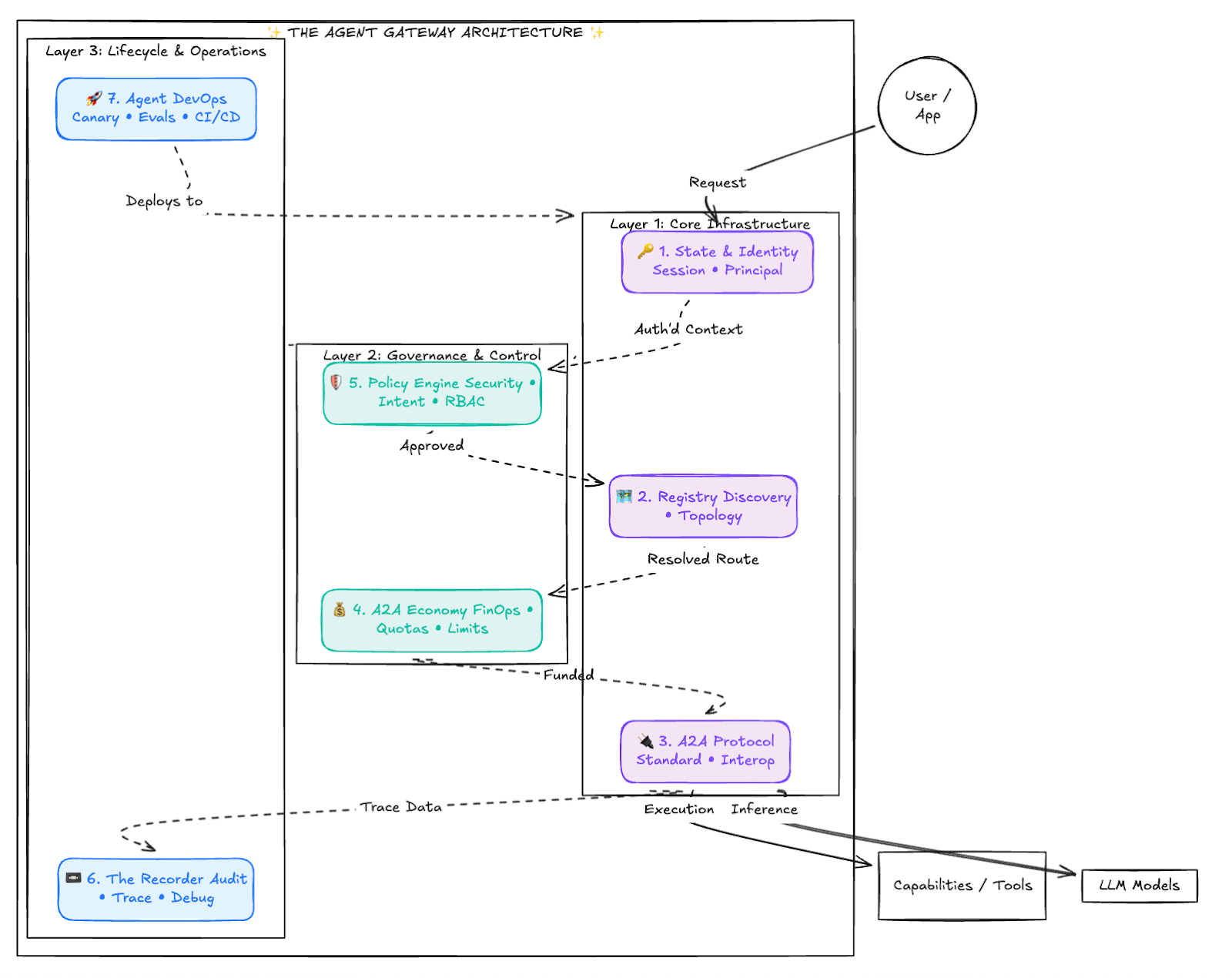
Fig 1: Visualization of the 7 Pillars of Agent Gateway and their Relations
The first and most critical challenge in adopting an Agent Gateway is handling the architectural divergence between Stateless Inference and Stateful Agency.
Standard AI Gateways are designed to be stateless load balancers. They route a prompt to an inference endpoint (like OpenAI or a hosted Llama model), receive a completion, and close the connection. However, as noted in our Agent Gateway Definition, agents rely on Context. An agent executing a multi-step plan builds up a "working memory" that must persist across network calls.
The TrueFoundry Agent Gateway solves this via two mechanisms: Session Affinity and Identity Propagation.
In a production environment, agents run as microservices scaled across multiple replicas. If a user initiates a task, the Gateway must ensure that subsequent interactions are routed to the specific instance holding the relevant "scratchpad" state, or manage the hydration of that state from a persistent store (Redis/Postgres).
Security in agentic systems is often compromised by hardcoded credentials. The Gateway moves authentication out of the agent and into the infrastructure using the Principal object. This creates a wrapper around the model that enforces constraints regardless of what the prompt says.
To illustrate why these mechanisms are mandatory for enterprise workloads, let’s examine a Claims Processing Agent. This agent receives a PDF claim, verifies the policy, and approves a payout.
You deploy a simple Python script wrapping GPT-4.
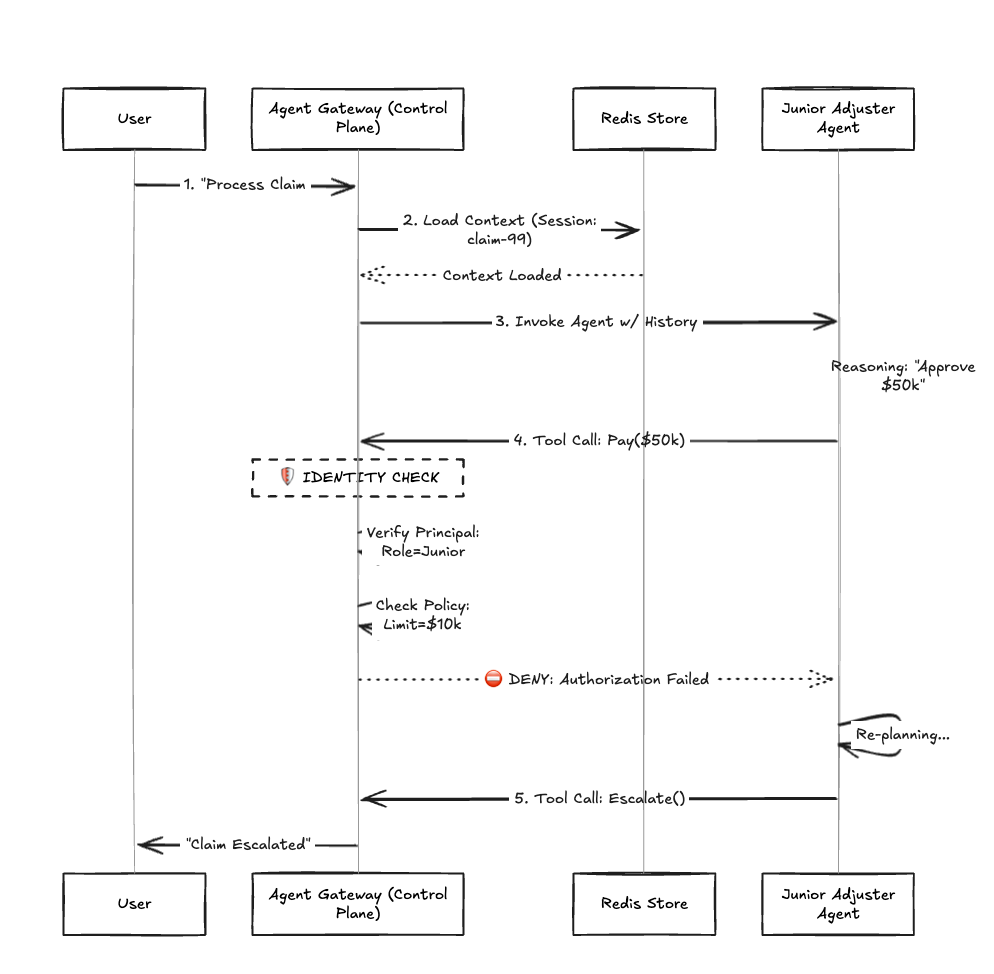
Fig 2: The Workflow with Sessions and Identities
By effectively managing State (ensuring context persistence) and Identity (enforcing granular attribution), the Agent Gateway provides the foundational stability required for complex workflows. It transforms the agent from a transient script into a persistent, governable service.
In the next post, we will explore The Agent Registry, discussing how agents can dynamically discover tools and other agents without brittle point-to-point integration.
Blazingly fast way to build, track and deploy your models!
TrueFoundry AI Gateway delivers ~3–4 ms latency, handles 350+ RPS on 1 vCPU, scales horizontally with ease, and is production-ready, while LiteLLM suffers from high latency, struggles beyond moderate RPS, lacks built-in scaling, and is best for light or prototype workloads.


The latest news, articles, and resources sent to your inbox
© 2025 All rights reserved.